Skip to content
GitHubYouTubeInstagram
1 / 51

2025 Robots & Game Animation

Gamma Ray — 2025 robot

Team 3847

Gamma Ray

  • 4events
  • 37-8-1quals
  • #2/41best rank
  • 6awards
Season Hardware
Photon 8515 — 2025 robot

Photon 8515 — development team

Photon 8515

  • 2events
  • 12-12-0quals
  • #17/31best rank
  • 1award
Season Hardware

How Reefscape worked

FIRST's official game animation for the 2025 season.

Welcome to Our 14th Build Blog

Welcome to our 14th build blog. Since 2012, we have been documenting our strategy, prototyping, and progress to allow everyone to follow along and learn from our season.

Our pre-kickoff slides have led off with an abbreviated version of this excellent post for some years.

This year is an opportunity to do more for yourself, your team, and the community.

2025 Season Links

CAD Collection

Nearly 800 links to FRC CAD models. If you have posted your 2024 Robot CAD please submit the link to the form below so we can include it in our collection.

Resources

Day 1: Reefscape Game Thoughts

  • This game is similar to 2019 in many aspects.
    • 2 game pieces, one defender, short cycles, etc.
    • Also, 2023 in some ways.
  • The field is a little longer than usual at 57ft, about 3ft longer than last season.
  • Flat field! YIPPEE!!
  • The field is rotationally symmetrical. Your alliance side of the barge is always on your left. The processor is always on the right. :slight_smile:
  • Weight limit is down to 115lbs. Bumpers are up to 20 lbs (plus any of the 115 lbs unused by the robot).
  • 6 RP is available per match; this means there should be fewer ranking ties, which devalues co-op as the tiebreaker.
  • Unlike in previous years, Auton is only limited by time, not game pieces.
    • You have full access to every game piece that starts on your side of the field.
  • Algae is less valuable than coral in quals because of the Coral RP
    • Doing both allows you to maximize points and avoid defense at Coral Station.
    • Algae mechanisms make co-op easier as well.
    • The processor is primarily a quals game mechanic as it only nets +2 in most situations.
  • This game will have extremely fast cycles for coral.
    • There may be a coral death cycle if human players can get it to roll to the reef, but it’s easy to defend
  • Scoring zones are protected, and loading zones aren’t, so defense will likely be at the coral stations.
  • 3-second instead of 5-second pin count will affect how the defense is played.
  • The max score is very high depending on how much you can stack coral in the trough.
  • The deep climb is challenging but valuable, especially for the Barge RP
    • It only requires 2 robots to get the RP if one of them can deep climb

Day 2: Intake testing and field build

Intake Tests

We made some quick modifications to our 2023 off-season robot to intake coral and pinch algae.

We haven’t driven it around yet, but we have done some rapid tests.

Videos

Coral Hold

Algae Hold

Coral realign?

Field Construction

We have been building our practice field as our primary task this weekend. We have a classroom that is smaller than half a field, around 24ft by 30ft (with a bump in for the door). We spent a lot of time yesterday measuring and taping out the locations of the field elements so we can make accurate autons once we are at that point.

Driver station and Reef

Start of the Barge (ours will only have 2 cage locations)

Coral Station (This is our portable one that will be used on our right side, we will also build a fixed larger one on the left side of our driver station)

Day 3: Current Robot Concept

Possible Auton Paths

https://docs.google.com/spreadsheets/d/1vOSqMLqW4JxQkLpR22Yblz-_U_eTrykvW3hJm5-6tN8/edit?gid=0#gid=0

Current Favorite Concept

A single-stage sideways elevator with a double-jointed arm. The manipulator is on a rotary wrist that can intake coral or algae.

This concept allows the robot to:

  • Pick up coral from the ground horizontally or vertically, from the coral station and the trough
  • Score coral on all four levels of the reef from either side of the robot while only aligning to the center of each reef side.
  • Pick up algae from the reef and the ground.
  • Score algae in the net or processor.
  • Leave one side and all of the belly pan open for a climb (we like the Rusthounds climb concept right now)

This concept doesn’t allow the robot to:

  • Hold a coral and an algae at the same time (you could modify it to hold them in a hopper on the belly pan)
  • Shoot algae from far away into the net
  • Shallow climb (it could, but we aren’t planning to)
  • Have full-width ground intakes

Robot Inspiration

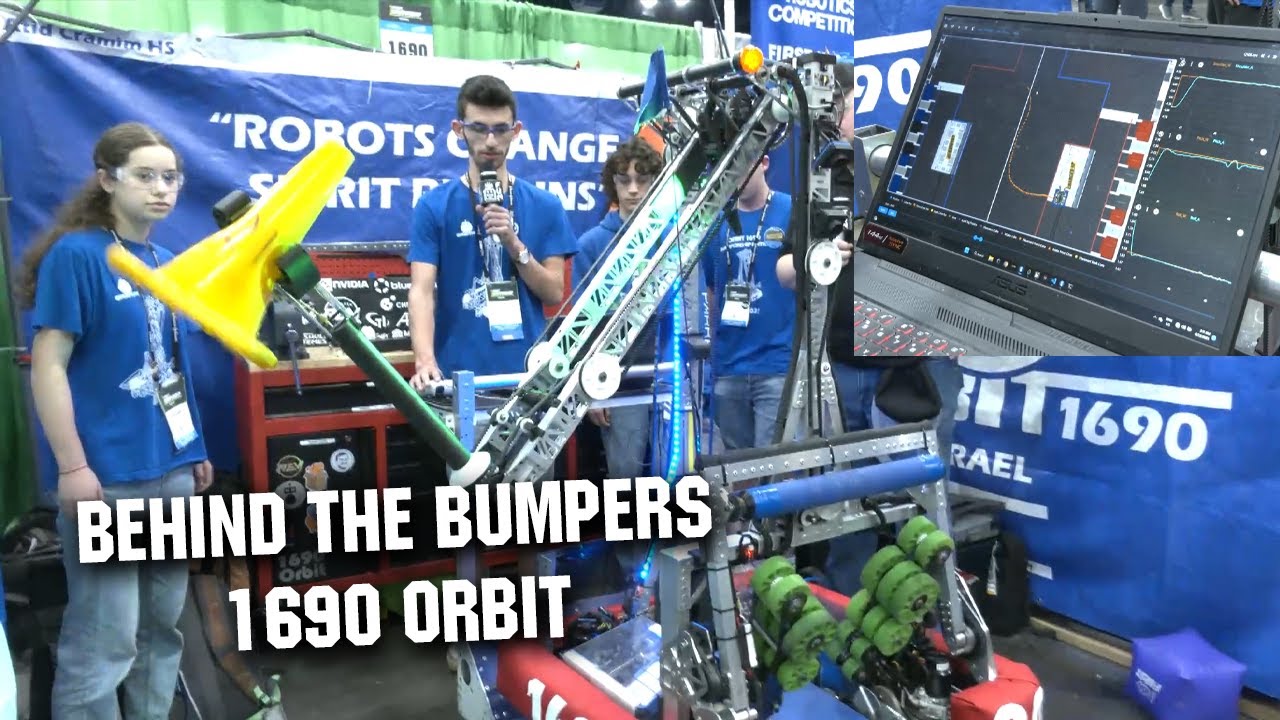
3847-2023 Offseason

A double-jointed arm on an elevator can get to many positions, such as floor intake, multiple reef levels, human feeder intake, and even taking coral from level 1 to move it up.

3005-2023

Rotary Wrist can intake one game piece on one side and the other on the opposite side.

here is the section of the design exploration that we did in the fall that covers their intake

1690-2023

Rotary Wrist

176-2023

176 is another twist wrist from 2023 - https://www.youtube.com/watch?v=IGFUludvb3w

‘Robot in 3 Days Mexico 2025’

They are working on a simple rotary wrist

148-2020

Climb that is both linear and tilts with the same rope.

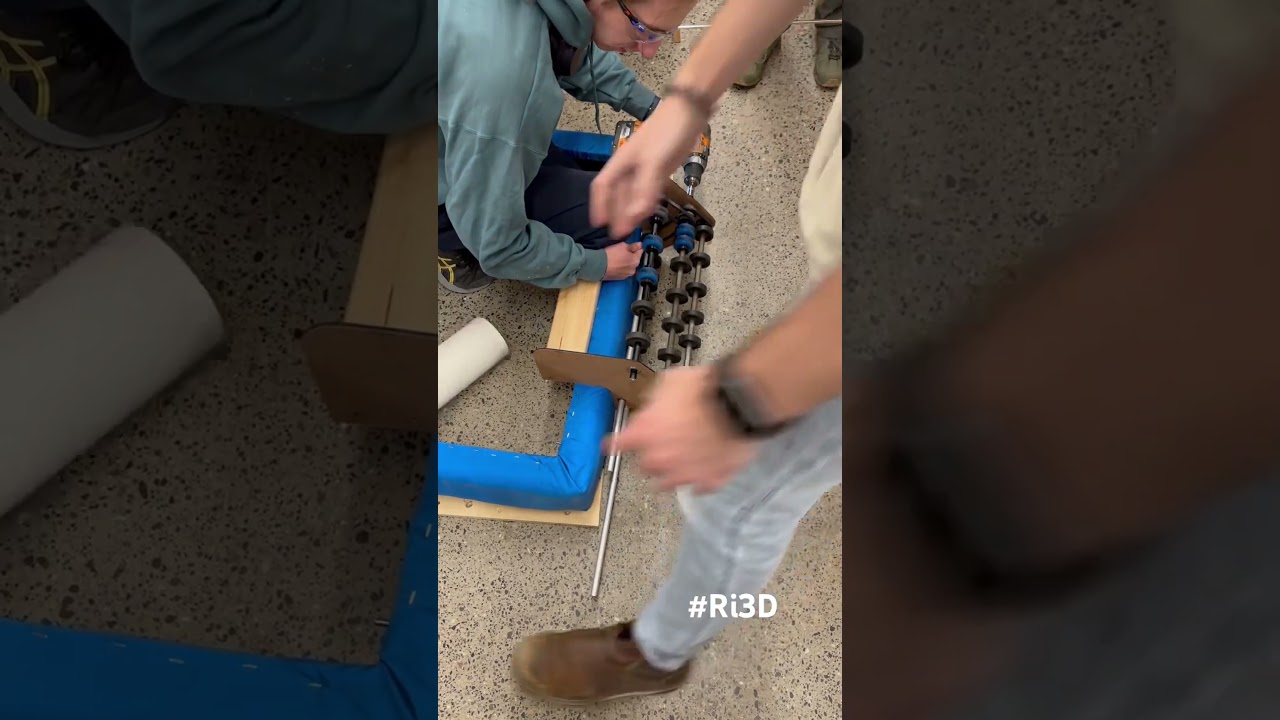
Ninjineers 2383-Ri3D

Shows a nice pinch claw for the algae and coal.

RustHOUNDS Ri3D

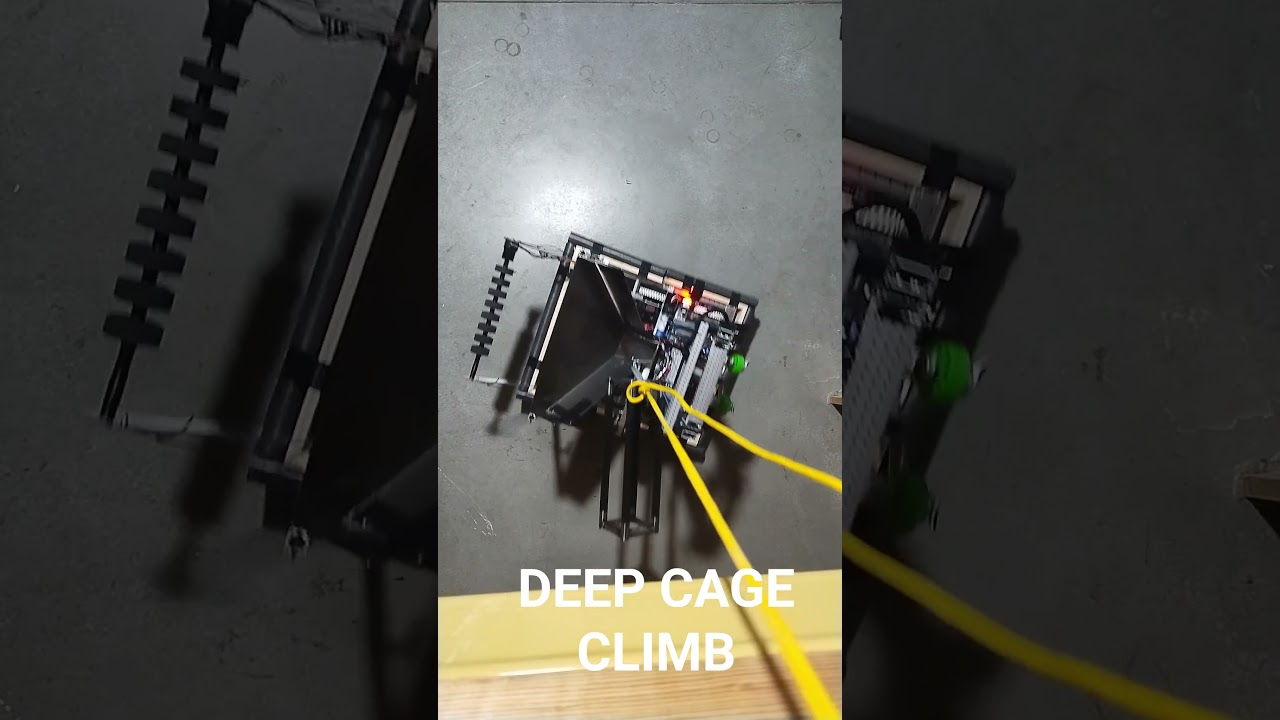
A very simple one motor deep climb

Unqualified Quokkas Ri3D

Pivot Deep Climber

Day 4: 1st Design Recap

Design Recap Week 1

Every Tuesday, we have our design recap meeting to go over our progress and to have our mechanism and control groups give us updates. This first one is just to update everyone on our progress and design ideas.

Other Robot Examples

Robot Inspiration

SuperNurds Cycle Testing

SuperNurds did some excellent example cycles using their 2024 robot. This shows that the cycle times from the feeder stations in this game will be very fast. 22 game pieces will be interesting.

Big Sky Robotics Ri3D

This ground intake can rotate coral 90 degrees while intaking.

Day 5: The Importance of Algae in the Net

We would like to emphasize the importance of Algae in Reefscape as we have seen a lot of discussion from other teams considering ignoring scoring Algae in the Net or altogether. We believe that it is very possible that Algae will decide matches and events.

With SuperNURDs simulating that a single robot may be able to score ~22 Coral in a match, two high-scoring robots can easily fill levels 3 and 4 and possibly level 2 as well.

Once every L3-L4 Branch of the Reef is filled (24 Coral), each Algae directly scored in the Net is worth more than each remaining Coral scored on the Reef. Additionally, if both alliances can score Algae effectively, every Algae taken from your opponent’s side of the field gives your alliance a point differential increase of 8 pts when scored in the Net, as your opponent now has 4 points fewer they can score.

This means it’s very advantageous for your opponents to cross the field, take any possible Algae, and score them in their Net. To reduce this risk, alliances in possible close matches should attempt to score all of their Algae in their Net as soon as possible.

In addition, because any Algae you place in the Processor allows your opponents to score it in their Net, you can only gain 2 points over your opponents. That means the Algae should never go into the Processor except to get co-op, or you are unable to put it in the Net, or if you believe your opponent human player will miss the throw at a greater than 50% rate, as that is when your expected value of scoring in the Processor matches the 4 pts from placing it in the Net yourself. We assume most human players will be much better than that, especially in playoffs.

In general, we believe every alliance in Reefscape should try to have more Algae in their Net at the end of the match than their opponents to ensure they have more points from Algae than the other alliance.

Day 6: Training Week 1: Elevator and Double-Jointed Arm

We’ve decided to do a second weekly Discord call on our team in addition to our Tuesday Design Recap. This call will cover technical topics we will use in the coming weeks on our robots and give our entire team a better understanding of the mechanisms, controls, and concepts that go into the robot. We’ll share most of these for the community to learn.

This week, we reviewed the Elevator concept Eliot from 111 posted before kickoff and our double-jointed arm from our 2023.5 robot.

Day 7: Early Coral+Algae prototype and Field Progress

Coral + Algae (CorAl) Mechanism Prototype

This prototype of our favorite Coral/Algae combined mechanism is very early. The geometry hasn’t been tweaked at all. It only requires one motor to intake both coral and algae.

The inside coral wheels are sprung into place and pushed away by the algae as it enters, allowing the algae to enter the mechanism.

The coral holder portion is offset so that when we twist the wrist, the coral shifts 6.5” left or right of center so that we can score on either Reef branch while aligned to the center of the reef section.

The two coral shafts of this mechanism would have at least 12” long rollers with side plates to allow it to center the coral. The algae wheel at the top of this mechanism will remain thin to stay out of the way while we score coral.

Field Build Progress

Here is our current field progress. The room is a little small, so we have to work around the constraints.

Day 8: CorAl (Coral & Algae) Rev 2

We made a 2nd revision of the CorAl mechanism it holds the algae much better. The next version will have a wider Coral section to test centering the Coral.

Day 9: What will define the top robots?

Basics needed to be great

  • Fast alignment and intake of Coral from feeder stations (feed on one side, score on the other)
  • Fast alignment and scoring of Level 2-4 coral
  • Lvl 4 auto scoring (3-5 probably)
  • Deep climb

Top teams will do one or more of these

  • Pick up Algae from reef to net scoring
  • Algae ground intake and score in net (maybe intake from lollipop)
  • Level 1 Coral scoring (there will be some very good teams that are bad at this)

Elite teams will do all of the above, and some of these

  • Coral ground intake
  • Coral level 1 intake and score higher
  • Able to score coral on two sides of the robot, so you never have to turn fully around from the feeder station.
  • Able to hold algae while scoring coral
  • Able to hold coral while scoring algae

Day 10: Coral Centering Prototypes

We’ve been working on learning how the coral can center itself inside a mechanism.

We saw a couple of videos last week, including the Quokkas robot that could center coral between two flat plates.

We built a test rig to see if we could learn what causes this centering and how we can use it on our mechanism. While also maintaining access to the coral pipe openings to be able to places them on the reef branches.

Here are some videos of the tests

From our initial tests, the coral only likes to have one surface in contact with it that has a friction material, so it is the compliant wheels in this case.

Day 11: Week 2 Design Recap


Day 12: Workspace Tour

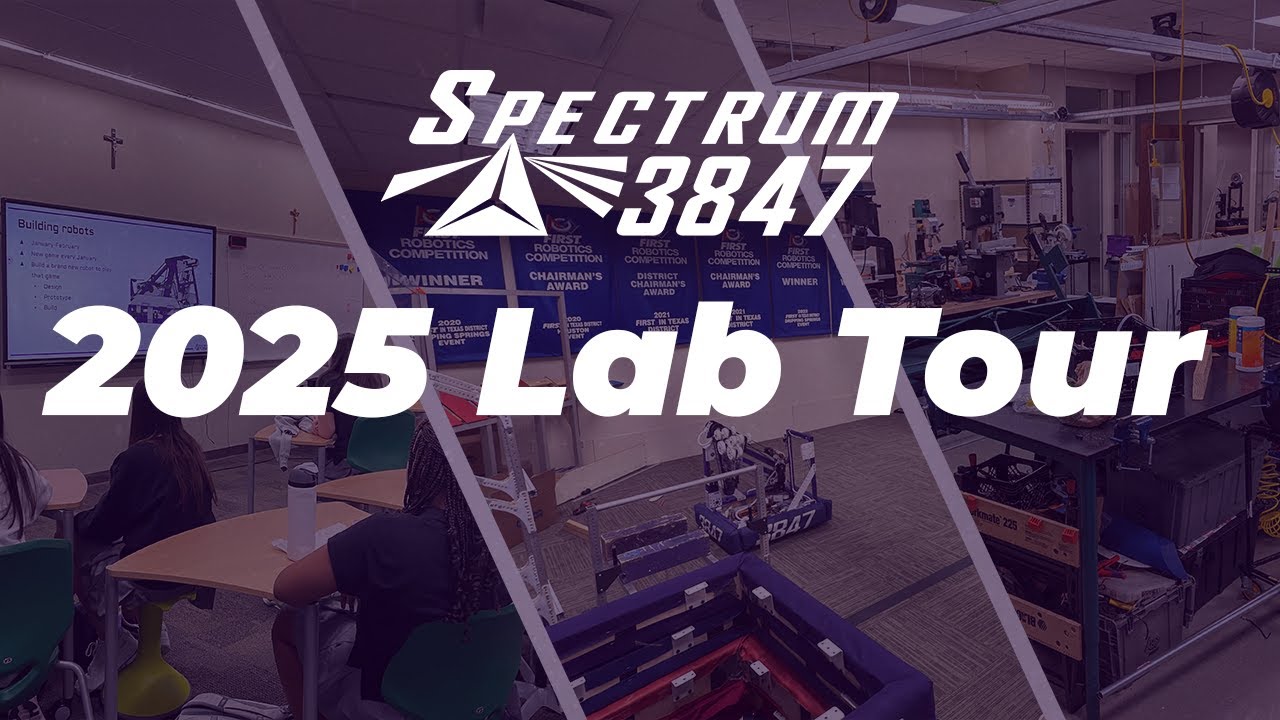
We recently filmed a tour of our lab. It briefly highlights the different spaces and tools we use day-to-day and showcases where we host TRI.

We would love to learn more about the spaces your teams work out of. Please fill out this form if you would like to share info about your space with the community! https://forms.gle/YYmuxdRqfybuSHQUA

Day 13: Week 2 Training: Onshape Overview

Day 14: Prototypes

Coral Centering

We worked on a new geometry for coral centering that uses much smaller rollers instead of wheels.

The goal is to be able to intake algae on the opposite side of one of the rollers.

Algae Intake Prototype

CAD

We’ve begun doing the detailed CAD for the drive train and elevator, but we still have lots of details to add for both.

Day 16: Elevator details and Prototypes

Elevator Belt Idlers

We created a way to make fully COTS elevator idlers. These are based loosely on the idlers from 2910-2018.

  • Round Standoff - Steel 1.5” or 2” 10-32
  • ¼” ID Bearings with ⅝ OD
  • Washers to hold on the belt
  • Press on retaining rings
    • Can use custom spacers to add some space so the retaining rings can’t shift much
    • McMaster-Carr

*Affiliate Links

Prototypes

Algae Holding

Day 17: Climber Tests

We have some videos of our current climber concept. It wraps around the cage and was inspired by Team Scream’s post, which stated that they would climb with their algae intake. This version of the climb also uses a couple of bolts mounted to our frame to prevent the cage from rising, similar to how the Everybot 2025 climb works.

The below test includes some very quick wedges to help center the cage as we drive in.

We believe this version of the climb will allow for very quick alignment and climbs at the end of the match.

Day 18: Design Recap Week 3

Day 19: Controls Meeting

On Monday we had a control meeting to go over many of the robot states, etc.

Day 20: Underrated Reefscape Features

Our way-to-early predictions of underrated Reefscape features. Based mostly on Open Alliance robots and talking to other teams.

Algae Net Scoring

We already covered this one.

Lvl 1 Coral Scoring

Lvl 1 coral scoring has some of the same advantages as Algae scoring. Lvl 2 to 4 will start to fill up in playoffs, especially as we get late in the season. You have to be able to keep scoring, and that means Algae or Lvl 1 Coral. With 27 Coral (63 - 36) available for you to score on Lvl 1, a robot that can do that efficiently and neatly will be important. Will your cycles get faster when levels 2-4 are filled, or will you slow down?

Sideways Elevators

We have seen many more open alliance teams turning their elevator to the side. This has two benefits: it allows you to avoid doing any kind of pass-through to get “rear loading and front scoring” and gives you more room for your climb to bring in the cage.

Powered Coral Station Intakes

Many teams have been relying fully on a passive funnel, but 340 and others have shown it may not work as well under defense or rapid movements away from the station. Adding some backstops and possibly rollers/wheels/stars to get the coral where you want it, even when the robot is moving fast, will likely help teams that load with a funnel of some kind. Other teams are taking directly from the coral station with their manipulators.

Coral Scoring while centered on a Reef Side

We’ve been much higher on this than others; scoring coral while centered on a reef side should allow for faster alignment, as you only have to align to 6 spots on the field instead of 18 (counting the center algae spots). Even if you only have the 6.5” offset from your coral to algae grabber, you can score coral on one of the branches and then grab algae without moving. In a game with cycles this fast, being good means saving seconds anywhere you can.

Holding Algae and Coral at the same time

This is probably the least important feature on this list, in our opinion, but it may have an effect on some cycle times. If you must drive to the back of the reef to score anyway, taking coral and algae with you on your way to the net can make your cycles faster. These don’t have to be on your end effector; holding them lower on your robot is fine if you grab them when needed.

Day 21: 3D Simulation of our Double Jointed Arm

Our control students got the initial simulation of our double-jointed arm working in 3D inside of AdvantageScope.

Day 22: Climber Updates

We continued working on our climber concept to understand how best to design our final version. Our goal is to be able to drive into the cage at a high-ish rate of speed and have it funnel correctly, not ride up the robot/climber, and then be able to climb and not swing down to touch the ground or swing enough to touch other robots. Early on, we will likely be able to take more time to climb, but as the season goes on, we want to be able to climb in the last 5 seconds or less of the match.

Day 23: CorAl (Coral+Algae) End Effector

We have been iterating our CorAl mechanism concept to accomplish many different tasks while being extremely light. This has led us to experiment with multiple ways to be able to expand the opening to allow algae intaking using the same roller that intakes coral. The concept combines a few different versions, so we don’t have any specific CAD to publish right now. We are working on a new version that will be motor-powered and closer to a real design.

Loading Coral from the Station with Centering

Scoring Coral Lvl 2/3/4

Coral Lvl 1

Taking Algae from the Reef

Scoring Algae into the Net

Picking up Vertical Coral from the Ground

Bad Attempts at Horizontal Coral from the Ground

Day 25: Design Recap

full-sim-test

Day 26: ATM Circuit Breakers

New this year, we are now permitted to use ATM Circuit Breakers on the PDH to power robot radios and RoboRIOs, per R615-R620. This means that unlike fuses, if the breaker on your radio or RoboRIO pops, power will be restored after a few seconds, allowing your robot to return to playing in a match after the RoboRIO or radio restarts.

When searching for a suitable 10A ATM breaker, we found that there were both Type 1 and Type 2 breakers. Using a Type 1 breaker is important for your robot to return to a match if a breaker pops, as Type 2 breakers will not reset until the robot is power cycled.

We searched on DigiKey, trying to find breakers we could purchase with the KoP voucher. From DigiKey, we found Eaton Bussmann breakers at a minimum quantity of 100, or OptiFuse in a more reasonable quantity. As friends don’t let friends use OptiFuse breakers, we found and purchased the Eaton Bussmann 21110-00 10A ATM breakers in more reasonable quantities at Mouser.

The breakers are a little thicker, and a lot taller than the standard ATM Mini Blade fuses, but do fit next to each other in the PDH. They are only slightly taller than the plastic housing around the voltage display.

We find it HIGHLY unlikely that we pop any fuse on our robot, and much less the ones for the radio or RoboRIO, but would much rather our robot come back online if we do.

Day 27: Week 4 Training Call: Gears, Belts, and Part Numbering

Day 28: Operator Console Laptop Audio Output

This is something from last year that we just never mentioned. We found it was really important for our drivers to know the time countdown so they could more accurately judge when to stop shooting notes to go to the stage for our trap climb. Our drive coach could be talking to an alliance partner or might be counting down the amplified time. So, we implemented a Python script that read the match time from network tables and played it out over a battery-powered speaker connected to the DS laptop.

The Python script can be found here, and the audio files we used are also in the repo.

https://github.com/Spectrum3847/2024-Ultraviolet/blob/main/scripts/NTcountdown.py

There are a couple of other scripts in the repo for doing things like having the robot code simulate a keypress on the DS laptop over networktables. We planned to use that to start and stop screen recorders for match review/logging purposes, but the recording was too CPU intensive and would cause control lag.

Day 29: CorAl New Version

The next iteration of the CorAl mechanism involves having a hinged opening for the Algae intake side. This means that the coral side can stay stationary, and we only open the passive side to allow the algae in. We believe this can get lighter. This test version doesn’t include the coral side. The next version will be a full test.

Day 30: SEA Update

Over the past few days we’ve been testing some of the concepts necessary for our SEA (Sideways Elevator and Arm) mechanism to work correctly. We quickly built a test elevator with some clecos and wooden plates to test the belt-in-tube path, which worked how we had hoped.

We also started assembling the shoulder joint stack-up, which includes a few custom parts. A couple to highlight are:

A printed encoder gear that bolts to the billeted shoulder sprocket so they rotate together:

And that same shoulder sprocket has a hole bored into it to allow our shoulder and elbow joints to be coaxial:

|470x626.792109256449

We mounted the half-assembled shoulder joint stack up to the test elevator, and it’s looking more like what the real one will be. yippee!

Day 31: Climber + Algae

Over the past couple days, we have been focusing heavily on how to package our climber and algae intake above our belly pan, without being so high that we start interfering with our arm. With how much space our climber winch gearbox was going to take, and both the algae intake and climber having to fold out, and nest over each other, it was proposed to go back to SCREAM’s original concept, combine the two subsystems, and place them on the side opposite the elevator, where the climb was located before.

This combined system allows us to make a more compact, lighter assembly than if they were separate. After working through basic intake and climb geometry, we think that we should be able to combine them with minimal compromises.

Intake Positions

intakePositions

Climber Positions

climbPositions

All Positions

allPositions

Day 32: Design Recap Week 5

Brave Browser-20250204

Day 33: InClimb

We got a quick prototype working for the new iteration of our combined climber and ground intake(s). We think this system should work well once we tweak it, and it will be much lighter than our former systems.

Coral Intake Test

Algae Intake Test

Climb

Day 34: New CorAl Version & Design Explorations

New CorAl Version

Our last version of the CorAl claw flexed too much when only using standoffs, so we had to think of a new way to make the plates rigid while keeping everything as light as possible. In the end, we designed and built a version that uses two T-slotted plates that will both keep the claw rigid and hold the coral in place, replacing all but one standoff. After testing, we observed that this new version is much more rigid and seems lighter than previous versions.

Design Explorations of FRC 5406 and FRC 694

We asked the coaches from 5406 and 694 if we could use their CAD models for training and they graciously agreed. Here is the video where we went over their robots with our team to explain how other robots this year will function and better prepare them for scouting and understanding the game.

Day 35: PM Manufacturing and Assembly & Aramco Hats

PM Manufacturing and Assembly

We used every machine in our lab today. The CNC Router, Laser Cutter, Lathe, Powder Coating Booth/ Oven, Titan 25 sheet metal brake and Wazer. We took some videos, and pictures of the manufacturing and Assembly of PM (Practice Machine)

Aramco Hats

Aramco sent us some Aston Martin F1 Hats for the team. Check out our instagram post showing it off around our lab.

Brave Browser-20250208

Day 36: Positions

Day 37: CAD Update and PM Status

We have updated the public CAD file for our robots to their current CAD state. Things will definitely still be changing, but they are closer to the final version. The 3847 robot has it’s named positions set so anyone can go in and see the various positions the arms and elevator can reach.

CAD link
Brave Browser-20250209

PM Status

We have some more items that are tested fitted on PM. Most of the wooden parts will become MaxComposite, with a few likely becoming aluminum.

Day 38: REV MAXComposite Testing

We tested MAXComposite versus regular extruded polypropylene and polycarbonate. These tests weren’t very rigorous we just wanted to see how much more durable the MAXComposite was than regular polypropylene and polycarbonate. (Disclaimer: we are #TeamREV)

TLDR: MAXComposite seems far more durable than raw polypropylene or polycarbonate.

Before this, we didn’t fully understand what made Max Composite so much better than other plastic sheets. MAXComposite does have the outer woven layers but the internal layers are also thin films of polypropylene that are laminated together, so unlike a fully extruded sheet of plastic, these thinner sheets can bend much easier without tearing.

Pictures

Here is a picture of a de-laminated cut-off of 0.2” MAXComposite with the woven outer skin removed.

0.2” MAXComposite after several 90-degree bends

0.25” Polypropylene after several 90-degree bends

Bending ¼” Polycarbonate

Videos

Here are a few videos of our testing. Please forgive my poor camera work, realized I should film this mid-way through doing things.

Bending MAXComposite and breaking individual layers of the woven skin and the polypropylene layers.

Bending Normal Polypropolene

Bending ¼” Polycarbonate

Bending 6mm White Polycarb imported from China

There are some more pictures and videos in this gallery:

https://photos.spectrum3847.org/2025-FRC/2025-Robot-Building/Maxcomposite-Polypropylene-Testing

Day 39: Design Recap Week 6

reverse-arm2-ezgif.com-video-to-gif-converter_360

Day 40: SuperMAXSpline

Our robot uses three MAXSpline pivot shafts for its shoulder, elbow, and twist. In the 2023 off-season, we needed to strengthen the MAXSpline in our double-jointed arm to prevent some bending and deforming of the spline profile. In 2023, we used an ⅛” wall 1” OD aluminum shaft for this, which worked well but was heavy and didn’t directly support the spline profile. This year, we wanted to find something better. (Disclaimer: We are #TeamREV)

We decided to use a 0.991” OD x 0.875” ID CF tube as the main stiffener for the MAXSpline. This CF tube makes the structure more rigid and allows us to put a ⅜” Round Hex bearing in the twist shaft to allow coaxial power transfer for our claw’s roller.

The CF tube we purchased from Clearwater Composites. The photos below is of the final products.

Our original plan was to fill the spline channels with epoxy while securing the CF tube to the MAXSpline. We realized it could be a large amount of epoxy, and we weren’t sure it would set correctly inside those small channels with that much epoxy. That led us to add more CF rods, which can be purchased inexpensively from Amazon as they are often used on drones and other RC aircraft.

These are the 3mm rods we purchased. (Affiliate link)

Here is a photo of the main CF tube with the 6 CF rods rubber banded to it as we prepare to epoxy them.

We use this epoxy, Total Boat Thixo Fast Cure (Affiliate Link). This epoxy is extremely easy to use as you don’t have to pre-mix it yourself. It comes in a standard caulk tube with mixing nozzles, so as you dispense the epoxy, it mixes right in the tip. Here is the 25:1 reduction caulk gun (affiliate link) we use to dispense it. We just put a few beads up each small rod and up the gaps on the CF tube and pressed into the MAXSpline, we then filled in each side at the top to secure everything. During the process the epoxy is easy to wipe up with paper towels if it gets on the outer face of the MAXSpline.

Empty MAXSpline Weight

Complete SuperMAXSpline Weight

MAXSpline vs SuperMAXSpline drop test, the SuperMAXSpline makes a much lower sound.

Day 41 & 42: Arm and Intake on the Practice Machine (PM)

We are getting the practice robot together and wired this weekend.

Basic Human Powered Scoring

Day 43 & 44: PM is wired and CorAl improvements

PM Wired and Weighed

We are nearly finished with the wiring on the PM robot. It still needs its Limelight 4s mounted and wired, but that’s mostly it. Our CAD says this configuration should weigh around 103 lbs, so we aren’t sure why we CAD so heavy as we believe we added far more than 3 lbs in wires and fasteners. We did CAD in more fasteners for some of the subsystems, but not all. Our 3D-printed parts are likely heavier in CAD, but there aren’t many parts.

CorAl Stiffening and Algae Bar

The MAXComposite ended up being a bit more flexible in our CorAl design than we anticipated, and this caused us to have issues with the belt skipping as it didn’t keep tension. We designed some 3D-printed stiffening parts that dramatically reduce the flex and keep the belt tensioned. In addition, we extended the algae bar to secure the algae a little better when we hold it.

Day 45: Robot Bring up and Testing

We are working on bringing up the PM robot. We spent a good portion of the day working through the various motor directions and assignments, updating all the firmware, etc. We were able to do a bit more testing of the CorAl Intake; it is much faster now and allows for a lot of misalignment of the coral.

Day 46: Week 7 Design Recap

|228x208.377|171.132x184.2376

Day 47: FM Build and PM Tuning

FM Build Progress

The drive train is nearly complete

The elevator is coming together

PM Tuning

Algae Scoring

Twist turning to position

Inclimb position control

Day 48: Gamma Ray: Design Explanation

For our team training tonight, we went through each of our mechanisms and explained many of the concepts.

We had the wrong video uploaded, it’s right now. As an apology, here is a video of the arm moving.

Day 49: Robot Finally Scored Coral

This is likely the latest we have been into a season to have a robot actually scoring a game piece. We are in the process of bringing up both of the other two robots, FM and Photon, as well.

Robot Scoring Video

The controls road map is to get the swerve drive tuned in a bit more and then tune in the vision alignment and add in the rest of the arm-elevator positions for scoring on all levels.

Climber Updates

Here is the next test of the climber using a ratchet mechanism based on Elliot’s design from this post. This ratchet is made with a 3D-printed hex adapter on the Kraken spline and laser-cut polycarb ratchet. It works well for testing. We plan to go to the metal Kraken hex adapters and aluminum parts for the ratchet and pawl.

This climber is still on polycarb plates that are going to get changed to MaxComposite so they will be much stiffer. We are also working on some aluminum skins for the climber arms to make them stiffer and keep the robot more level. We also may add some funneling near the top to stop the cage from angling as much when we climb.

FM Status

Photon Status

Day 52: Photon Update!

These past couple of days have been a major push to get Photon ready for our week 1 event, Waco.

This year, there are a lot of similarities between the Photon and Spectrum robots.

Drivetrain

Basically the same as the Spectrum Drivetrain, some gussets are different here and there so that Spectrum could save weight. Photon isn’t as close to the weight limit, so we didn’t have to cut weight in different places like Spectrum had to.

Elevator

The Photon elevator has the same structure as the Spectrum elevator with a couple of differences. Since Photon does not have as many degrees of freedom as the Spectrum robot, we needed fewer motors in places. To save time from making new plates, we used the same exact plates as the Spectrum robot, but only used one slot instead of both.

We only use one chain for the arm, so we only need one motor and a tensioner on one side.

We do our shoulder a different but similar way. We decided to power our coral mechanism coaxially through the MaxSpline Shaft with the motor mounted and running on the elevator carriage.

Photon Coral Mech

We took our inspiration from 6045’s coral mechanism. It will load in on one side and score on the other side.

Climber

The climber on Photon is the exact same climber that Spectrum will be running. It will just run first at Waco!

It spin.

Day 53: Design Recap

Day 60: Week 9 Design Recap

2025 Spectrum Design Slides (1)
2025 Spectrum Design Slides (2)
2025 Spectrum Design Slides (3)
2025 Spectrum Design Slides (4)
2025 Spectrum Design Slides (5)
2025 Spectrum Design Slides (6)

Day 67: Week 10 Design Recap

2025 Spectrum Design Slides
2025 Spectrum Design Slides (1)
2025 Spectrum Design Slides (2)
2025 Spectrum Design Slides (3)
2025 Spectrum Design Slides (4)
2025 Spectrum Design Slides (5)
2025 Spectrum Design Slides (6)
2025 Spectrum Design Slides (7)

Brave Browser-20250311